CHALLENGE
Reimagine a government program
How might Zambia’s GEWEL program—designed to boost rural women’s livelihoods—move from a World Bank-funded initiative to a sustainable, government-owned service, while better aligning with the realities of rural women surviving off piecemeal work and subsistence farming?
Despite reaching 38,000+ women across 51 districts, GEWEL’s program faced several structural gaps, the program struggled with three tensions:
- Short-term interventions (like cash grants and 21-day training) that failed to build lasting financial independence.
- Top-down design disconnected from the lived realities of its users.
- A one-size-fits-all model that couldn’t flex to local needs or varying literacy levels.
The challenge was to reimagine the program—not just as a service, but as a platform to unlock long-term capacity, community wealth, and citizen trust.
CONTEXT
Why is capacity building important in Zambia?
Zambia is a young, largely rural nation where 78% of rural women live in economic poverty (2018). The majority are informally employed, under-educated, and risk-averse due to chronic food insecurity. Yet, many possess strong agricultural skills, community ties, and an appetite for change, if systems supported them. Capacity building is vital in Zambia, where rural poverty, food insecurity, and limited economic opportunity continue to define daily life for most women. Programs like GEWEL are helping shift this narrative by equipping women with resources to build sustainable livelihoods. But to unlock lasting change, government services must evolve.The Girl’s Education and Women’s Empowerment and Livelihoods (GEWEL) Project for the Republic of Zambia supports the Government of Zambia to increase access to livelihood support for women by offering training and startup capital, as well as savings and mentoring support. Encouraged by its wide reach and initial success the Government realised its potential to improve capacity building now and in the future – they were keen to evolve the program and explore its next iteration.
APPROACH
Innovation driven by citizens
This was a 4-month embedded design research and service strategy project in collaboration with Zambia’s Ministry of Community Development and the World Bank:
I developed a future-state service offering proposal focused on capacity as a journey (sustain, grow, empower). Here is a summary of activities conducted over a 8 month engagement:
Immersive Field Research
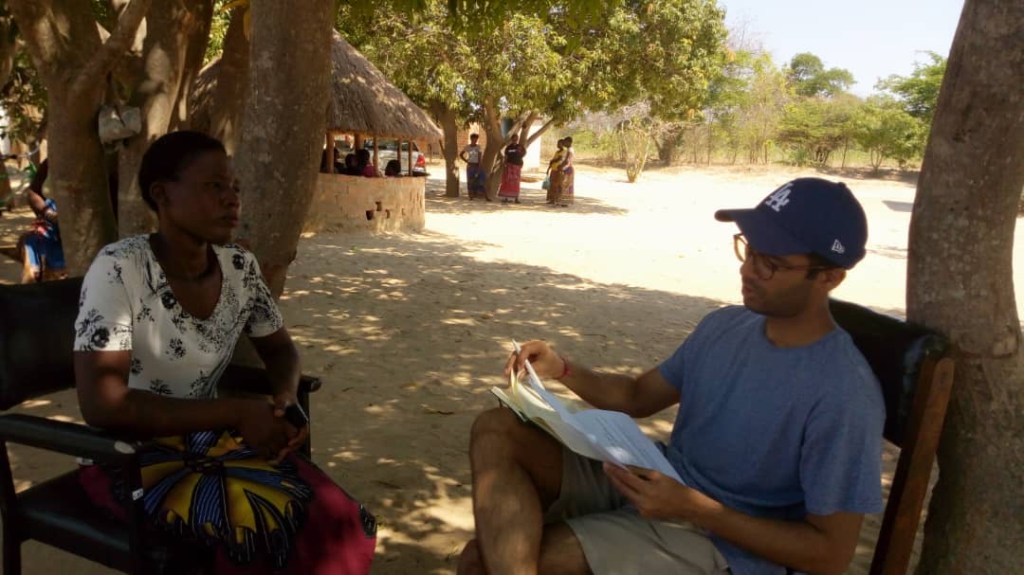
- 26 days in Zambia visiting Lusaka and 3 villages across 2 districts
- 37 interviews, 1 week of field research and site visits, 3 workshops,
- Ethnographic immersion with GEWEL beneficiaries and community volunteers
Systems + Human-Centered Analysis
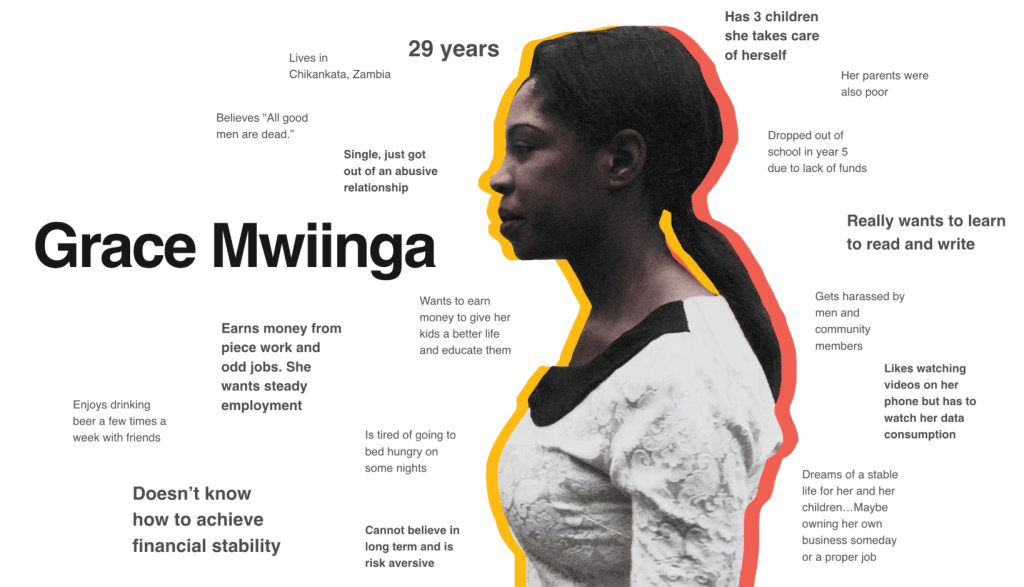
- Used “Grace,” a composite persona, to map structural barriers and lived experiences
- Identified gaps between government assumptions and real community needs
- Mapped the existing service blueprint and surfaced opportunities for redesign
Co-Creation with Stakeholders
- Ran ideation sessions with civil servants, community-based volunteers, and program leads
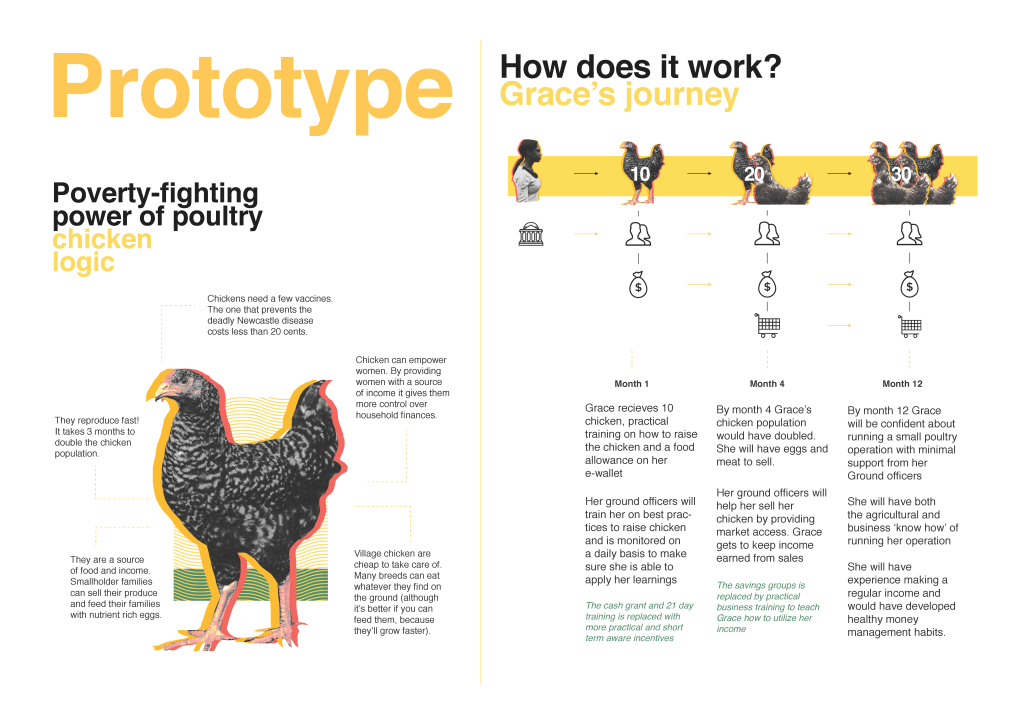
- Designed a smallholder poultry pilot (10 women, 100 chickens) as proof-of-concept for scalable, resilient livelihood models
Operations and Service proposal
- Delivered a vision for a national service that turns survival into sustainability, and women into builders of regional food economies
- Mapped service delivery bottlenecks and disconnects between citizen needs and government priorities
- Co-designed a new lean operational model, new team shape and roles to own the service
OUTPUT
A future-state government service
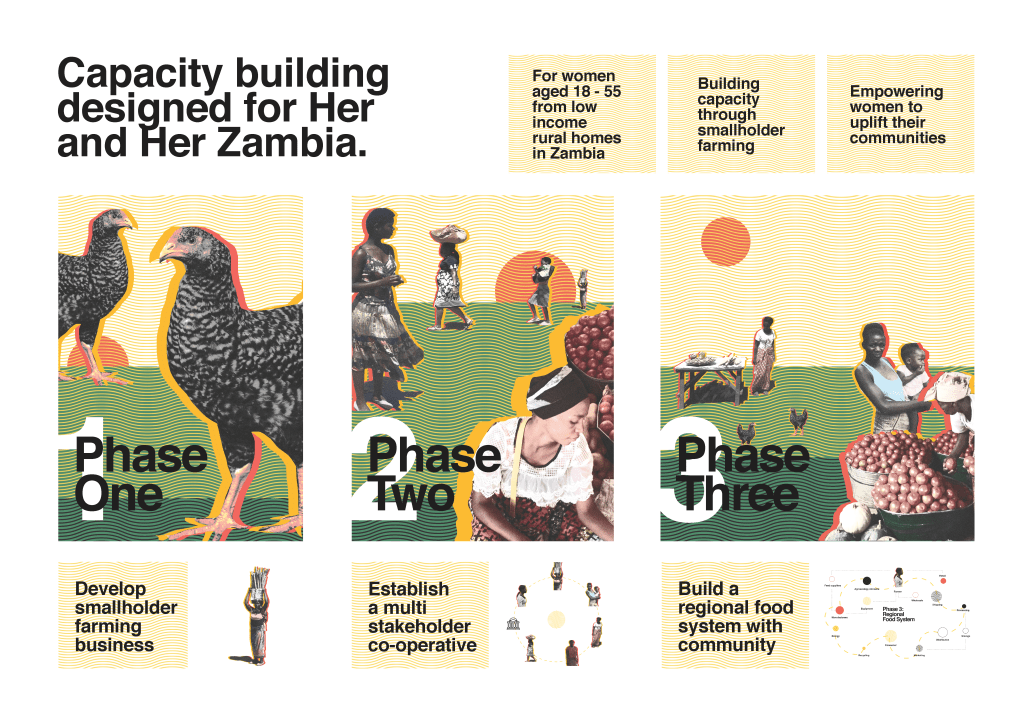
The #HerZambia Scheme is a national service vision focused on capacity building for rural Zambian women at the risk of poverty. Designed by from user led insights and co-creation – the scheme envisions empowering the women to be catalysts for establishing regional food systems through inclusive smallholder farming activities.
3 Horizons of Growth
Horizon one focuses on building successful smallholder farms. This is the core of the whole scheme and will enable Grace to sustain her daily life through regular income generation by making the most of her existing skill set. Horizon two looks at embracing the emerging opportunity to develop community wealth by grouping small holder farmers in a cooperative model to access economies of scale while maintaining an operation within their capacity. Horizon three aims to nurture growth to uplift the entire region by developing regional food systems which will generate economic opportunities for the whole community.
The Pilot – “Chicken or Egg”
The most important challenge for this scheme will be to test ways in which the government can enable smallholder farming operations. ‘The chicken or egg’ prototype aims to build a 10 women poultry operation. The prototype taps into the research insights from Grace’s needs and from the GEWEL team. It hopes to, over one year, teach the selected women how to run a profitable small scale poultry operation to help them sustain their livelihoods and achieve financial stability.
This prototype was the result of multiple co-creation sessions to identify how the government might stimulate smallholder farming at a low cost in a way that connects with Grace. It was designed with the intention to develop a proof of concept of how enabling low cost smallholder farming activities can empower women like Grace to sustain their livelihood.
 Amogh's Field Manual