CONTEXT
A weakening social fabric in urban spaces
Social cohesion—the invisible fabric that makes neighbours trust each other, look out for one another, and feel part of something bigger—is under pressure. With growing urbanisation, digital isolation, economic precarity, and the design of housing that often prioritises efficiency over community, the spaces we live in are becoming more disconnected, not less.
Research shows just how consequential this erosion is. Communities with low levels of social cohesion experience:
- Higher crime rates: Studies link cohesive communities to up to 40% lower levels of antisocial behaviour and property crime.
- Poor mental health outcomes: Loneliness now affects more than one in four UK adults, with isolation linked to increased risks of depression, anxiety, and cognitive decline.
- Weaker civic resilience: During moments of crisis—like floods, pandemics, or local unrest—communities with higher cohesion bounce back faster, collaborate more effectively, and maintain trust in local institutions.
- Lower safety perceptions: A 2019 ONS report showed that feelings of safety in one’s own neighbourhood correlate strongly with knowing and trusting neighbours.
Yet many housing developments, especially in peri-urban and low-income areas, offer few interventions to address and tackle dropping social cohesion. Importantly developers are more focused on sqft optimization without considering the social cost of doing so. The result? Functional housing that often feels sterile, unwelcoming, or atomised. Buildings may go up, but community doesn’t always follow.
CHALLENGE
A departure from headline metrics that don’t say enough – Product and service owners need meaningful insights
Walsall Housing Group (WHG) is one of the UK’s largest social housing providers, with over 10,000 homes and a mission to build not just houses, but thriving communities.
And they’re not alone in feeling the strain. Like many housing and community developers, WHG has been grappling with a crucial question:
How might we foster stronger community bonds in the places we manage—especially when resources are stretched and interventions must be low-cost and scalable?
That’s where we came in.
Our challenge was to help WHG uncover low-cost, high-impact interventions that could be piloted and scaled across their housing portfolio to enhance social cohesion—all through a deeply user-centred design approach. .
APPROACH
Not just designing for residents, but with them
Listening Deeply: Building a Foundation of Insight
We began with a simple principle: before designing anything, understand everything.
Our research phase combined global perspective with hyperlocal insight. We studied urban communities across cities like London, Singapore, and New York to understand how social cohesion was being fostered—or quietly eroded. We leaned on the work of urbanists like Jan Gehl, who warned that modern housing design often strips away “social opportunity zones”—the doorsteps, balconies, and front gardens where interaction naturally occurs.
“A good city is like a good party—you stay because you’re enjoying yourself.”
— Jan Gehl
We reached out to co-living startups, UK councils, and social housing innovators to collect expert perspectives. We learned how development pressures were often squeezing out shared spaces in favour of square footage, and how this was compounding loneliness, mistrust, and disengagement among residents.
To ground these insights, we embedded ourselves in WHG properties—observing resident behaviour, interviewing tenants, and unpacking the lived experience of social life (or the lack thereof) within these communities. The stories were stark: people who had lived side-by-side for ten years without a single conversation. Residents who didn’t know how to ask for help—or who to ask. For many, community felt like something that happened elsewhere.
We synthesised this research into a powerful insight model:
- Getting to know your neighbours
- Getting to know your community
- Forming a relationship with your location
These three drivers formed the spine of our design. We mapped resident journeys, WHG’s internal processes, and developed opportunity scenarios. What became crystal clear was this:
If the resident experience is nurtured from move-in day, social cohesion can take care of itself for years to come.

Fig.1 – Example of opportunity area visualisation

Fig.2 – Example of ideal resident experience phases
Co-Creating a Socially Conscious Resident Experience
Armed with this understanding, we formed a hypothesis:
A conscious introduction to community and place builds long-term cohesion.
To test and shape this idea, we ran a series of co-creation workshops—bringing WHG stakeholders and Walsall residents together. These Zoom-based sessions gave us a 360º view: residents shared their hopes, fears, and lived experiences; WHG teams unpacked operational realities and strategic aspirations.
Together, we prototyped simple but powerful interventions that would make people feel welcome and connected from day one:
- A WhatsApp group to connect new residents with neighbours
- A Welcome Pack to help orient people to their new home and surroundings
- Local business discounts to encourage exploration of the area
- A first-week community event to create a meaningful moment of connection
We weren’t designing for the community. We were designing with them.
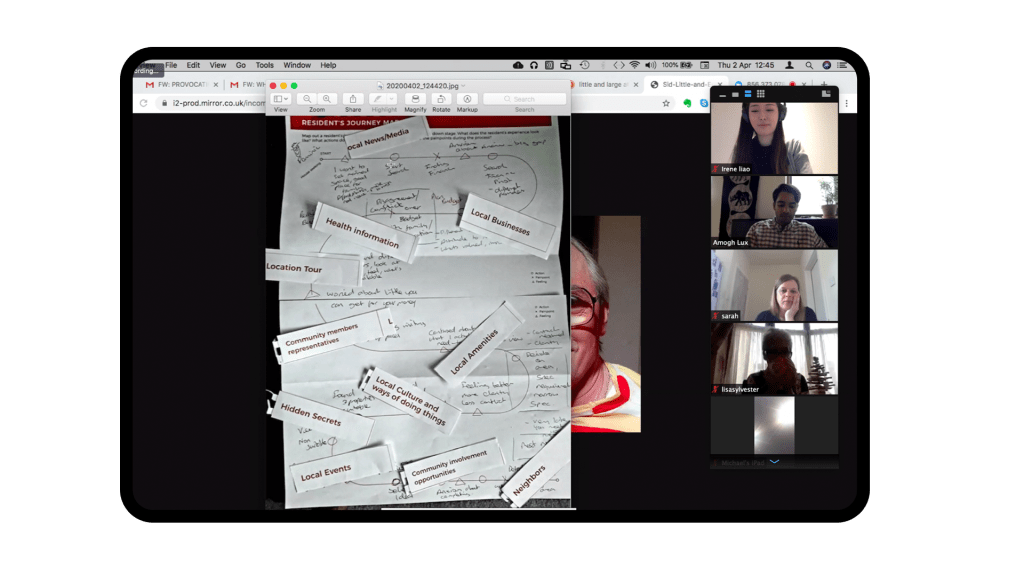
Fig.3 – Screenshot from a zoom co-creation workshop
Prototyping “Knock Knock” : A Toolkit for Human Connection

What emerged was Knock Knock—a two-part offering designed to gently nudge residents toward community.
The Social Kit
A physical kit with playful, low-pressure tools:
- Challenge Cards to spark acts of neighbourliness
- Community Postcards for analog introductions
- Local highlights and maps that turn exploration into discovery
The Digital Platform
A simple, opt-in app that offered:
- Practical onboarding info about WHG services
- Drop-in tea sessions to meet others
- A community treasure hunt to explore local assets—parks, businesses, meetups, and more
Knock Knock was intentionally lightweight. It didn’t require massive infrastructure or behavioural change—just a few nudges in the right moments. And while it was designed with new residents in mind, we ensured it was just as relevant and accessible for those who had lived in WHG properties for years.
We piloted Knock Knock with 40 residents, and the response was deeply encouraging. Residents called it “the first time anyone helped me connect like this,” and WHG stakeholders saw the potential to scale. The concept moved forward to an expanded pilot across four high-rise blocks.
OUTCOMES
Low-cost, high-impact interventions
🎯 Resident Impact
- The Knock Knock pilot reached 40 residents—many in high-density housing.
- Residents reported feeling “seen,” “more confident,” and “excited to meet others”
- 87% felt it helped them connect with neighbours
- 75% engaged in a local activity via the kit or platform
🛠 Operational Benefits for WHG
- Smoother onboarding: Fewer calls, clearer comms, less friction for new tenants
- Higher engagement: Better neighbour ties = stronger tenant satisfaction and lower churn
- Fewer complaints: Early community bonds reduced common service issues
- Low-cost, high-scale: Easily replicable across WHG’s 10,000+ homes
 Amogh's Field Manual