CHALLENGE
Business and regulatory processes (backstage of service experiences) can sometimes feel disconnected or retrofitted to the service
Government services can easily fall apart behind the curtain. Backstage processes—the rules, reviews, and workflows that keep a service running—are treated like someone else’s problem. They’re built in isolation, lag behind the user experience, and make it nearly impossible for staff to do their jobs well.
I was brought in to help design one of these critical backstage engines. The Animal and Plant Health Agency (APHA) had just been handed the responsibility of regulating the UK’s new Forest Risk Commodities (FRC) law. My job? Help them design their first ever end-to-end regulatory flow—how they would manage business exemptions, review annual submissions, monitor compliance, and escalate enforcement. And do it before the policy had been finalized, with a team still being assembled.
This wasn’t just a regulatory admin task. This was about building the foundations of compliance in a way that wouldn’t just serve the agency, but also work in lockstep with the experience of the people and businesses using the service.
CONTEXT
What Regulators Actually Do (and Why They Matter)
When a government launches a compliance service, there’s usually a regulator backstage keeping it all in check. These teams don’t just enforce the rules—they interpret policy, assess risk, investigate non-compliance, and keep the playing field fair.
Depending on the service, these responsibilities might be shared across multiple teams—or it could fall entirely onto a single team to own end-to-end. In the case of the Forest Risk Commodities (FRC) regulation, it all sat with one: a newly formed regulatory unit within the Animal and Plant Health Agency (APHA) .
Their job was to oversee UK businesses importing commodities like soy, palm oil, and beef to ensure their supply chains weren’t contributing to illegal deforestation. Sounds straightforward—until you realize that APHA had never run a full-stack regulatory function before. They needed to define the entire playbook: how they’d set review targets, process submissions, run sampling logic, flag suspicious activity, and escalate enforcement cases.
And it had to be digital from day one. Their tools, workflows, and policies would all need to support—not slow down—a national online service. Without a clear regulatory foundation, the front-end service risked asking the wrong questions, collecting the wrong data, and leaving both users and regulators in the dark.
APROACH
From Zero to One: Designing and building confidence in regulatory workflow
Demystifying the regulatory function
We didn’t start with process maps—we started with people. With support from our research lead, I kicked things off by treating regulators as what they are: a critical user group with decisions that shape the entire service. I ran short, exploratory interviews with anyone remotely involved in regulation—mapping their roles, pain points, tools, decision-making powers, and team structures.
These weren’t just fact-finding chats. We used live-mapping to co-create understanding. It helped us spot the major responsibilities, surface team gaps, and (critically) unpack the relationship between regulators and the businesses they were overseeing.
Two insights reshaped our direction:
- Regulators held the pen on the rules that would directly affect user experience—so we needed them involved in concept design and testing, not siloed off in a policy echo chamber.
- A clear regulatory pattern emerged: every service had the same backbone—submission review → audit and sampling → casework → enforcement. It was a funnel. That pattern became the foundation for our work.
Co-creating the Workflow
With that structure in hand, I ran two fast-paced co-creation workshops with APHA and Defra’s extended regulatory and policy team. The draft end-to-end flow acted like a spark plug—suddenly everyone could see how their piece fit in. For each stage, we captured activities, decision points, tools, assumptions, and open questions.
The results? Within a week, we had the raw materials for APHA’s first regulatory operating model. I synthesised the chaos into a clear, annotated workflow with evidence-based personas and ownership trails. We also identified 14 key moments where regulatory decisions shaped user experience—things like calculation methods for commodity usage, where inconsistencies could easily create confusion or unfairness for businesses.
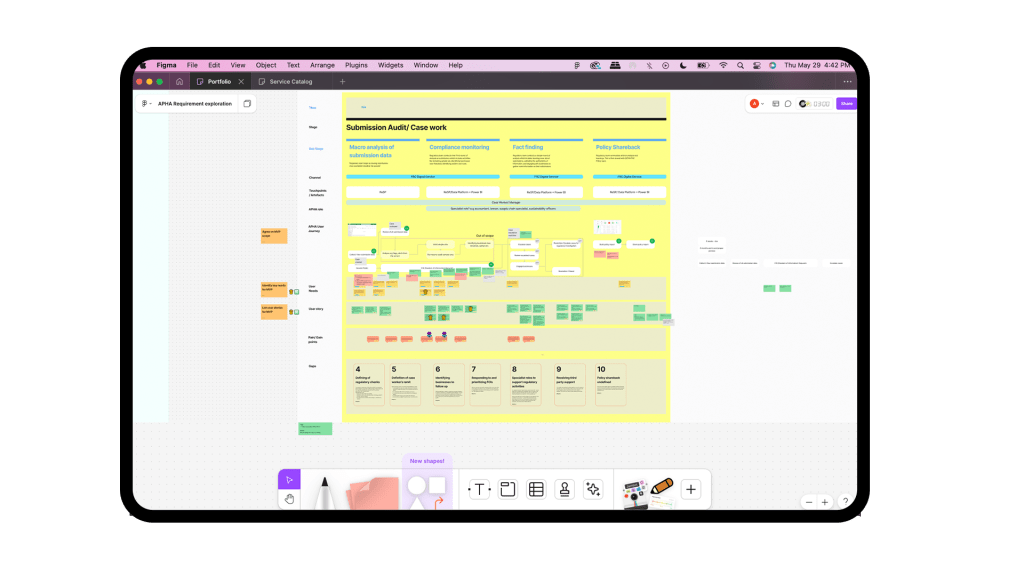
Fig.1 – Sample visual of outputs from co-creation workshops
Spotlight on the Case Worker
As the workflow took shape, one thing became obvious: the case worker was the linchpin. This role sat at the centre of triage, audits, escalations, and enforcement. If case workers didn’t have a clear process—or the right tools—the whole regulatory engine would stall.
So we zoomed in. We ran a journey deep-dive and tested early versions of the process with real case workers. This helped us refine the workflow to match real-world tasks, surface bottlenecks, and bake in usability from the start.

Fig.2 – Sample visual of caseworker journey deep dive
Prototyping the Bare Minimum to Unlock Progress
This was the final step in our approach—and a crucial one. While we were already operating a few steps ahead of a typical alpha, this was the moment to stress test everything: the research, the workflows, the assumptions, and the way it all fit together.
We kept it intentionally minimal. No polished UI, no fully working system. Just low-fidelity screens, rough end-to-end user journeys, and realistic scenarios that let us walk through the case worker experience and key regulator decisions. It was scrappy by design—but sharp enough to validate our thinking and surface gaps before they became expensive.
The impact was immediate. For APHA, it brought clarity and structure to a regulatory function that was still forming. It helped them get their house in order fast, identify operational risks, and align around a shared understanding of how their team would actually work.
And for the wider program, it unlocked momentum. The prototype gave us just enough evidence and rationale to justify moving into beta—with confidence. There was still a long road ahead: tech tooling hadn’t been selected, the regulatory team hadn’t been fully resourced, and big policy questions were still unanswered. But we’d built the scaffolding. We had something to build from.
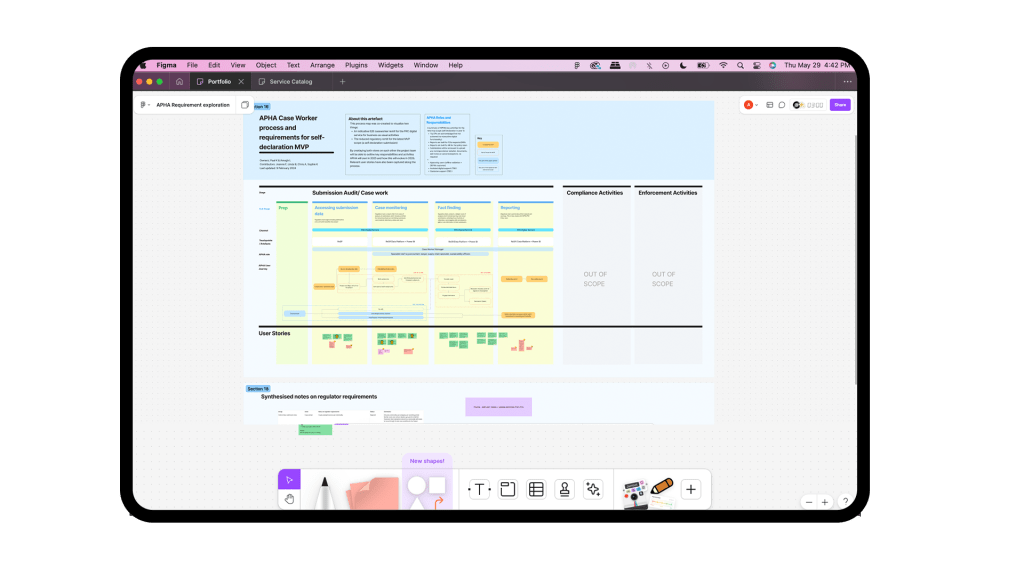
Fig.3 – Sample visual of final regulatory process for phase 1
IMPACT/ OUTCOMES
This wasn’t just about building a process. It was about proving that even in complex, policy-heavy systems, you can design with clarity, empathy, and momentum—and actually get things moving.
Passed Alpha with confidence and unlocked beta readiness
Our regulatory blueprint played a key role in passing the GDS Alpha assessment. It gave the program a validated, user-informed foundation—enough to greenlight private beta without hesitation.
Designed APHA’s first end-to-end regulatory model from scratch
We co-created a complete, evidence-backed compliance flow—linking exemptions, audits, casework, and enforcement into one shared operating model for policy, ops, and tech to rally behind.
Saved 3–4 weeks of planning, resourcing, and policy alignment
By visualising the full regulatory journey early, we avoided back-and-forths, reduced duplication, and clarified resourcing needs—de-risking the beta phase before it even began.
Embedded user experience thinking into compliance design
Our approach shifted regulators from policy enforcers to service collaborators. Their decisions were now shaped by real user needs—resulting in fairer, clearer, and more intuitive guidance.
 Amogh's Field Manual